Methods / Conduit Fill
How RokBench checks this
Conduit Fill
Fill percentage from the dimensions you supply, against the limit for the number of conductors.
1. What this check does
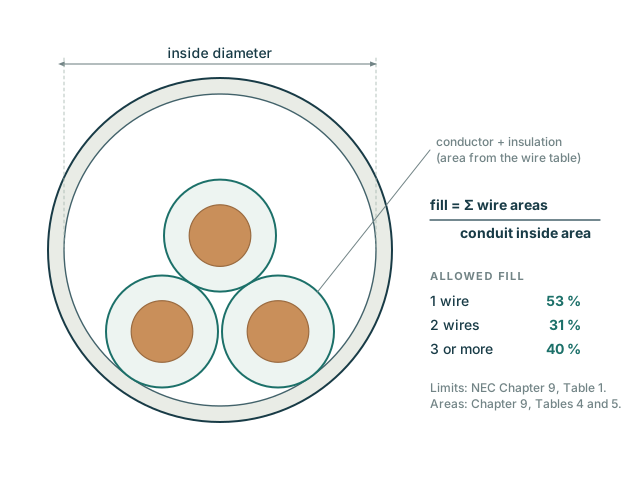
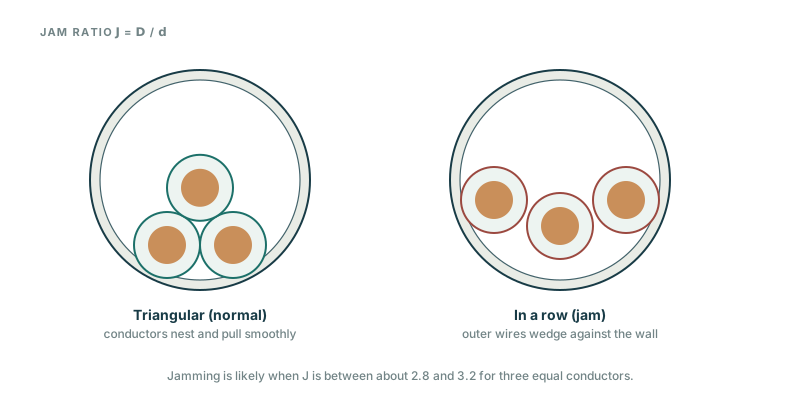
Adds the cross-sectional areas of the conductors or cables you enter and compares the total with the inside area of the conduit, against the maximum fill for that number of conductors. For three equal conductors it also reports the jam ratio.
2. Inputs used
- Conduit inside diameter.
- Outside diameter and quantity of each conductor or cable.
3. Formulas and assumptions
Fill
d conductor outside diameter, n count, D conduit inside diameter.
Jam ratio
Three equal conductors.
Limit
Symbols
| Outside diameter of conductor type i | in or mm | |
| Number of conductors of type i | ||
| Conduit inside diameter | in or mm | |
| Jam ratio for three equal conductors |
- RokBench provides no conduit or conductor dimension tables. The result is only as good as the diameters you enter.
- A multiconductor cable counts as a single conductor.
- Limits: 53 % for one conductor, 31 % for two, 40 % for three or more, 60 % for a nipple (Chapter 9 Table 1 and Note 4).
4. What is NOT checked
- Pulling tension, sidewall pressure and bend radius.
- Ampacity adjustment for more than three current-carrying conductors.
- Nipples: the 60 % limit is applied when you mark the raceway as a nipple (24 in or less between enclosures); the ampacity adjustment exemption for nipples is not part of this tool.
5. Reference standards
Pointers only; consult the edition adopted by your authority having jurisdiction.
- NEC 2023 Chapter 9, Table 1 and Notes to Tables
- NEC 2023 344.22, 358.22 (and the corresponding section for each raceway type)
6. Validation cases
No worked example with a published answer is registered for this page yet. Have one we should add? Use the Feedback link. All cases: Validation.
7. Known issues and changes
See the Engineering Notes. Try the tool: Conduit Fill.